
The Complete Guide to Urinary Tract Infection (UTI)
This article is a complete guide for women (and men) who tend to get urinary tract infections. You’ll find root causes, herbal preventions and supports for daily use, what to do if you get an infection, herbs to consider, and two herbal tea blends for urinary tract support and infection.
Clinical herbalist, teacher, and author, Heidi Villegas shares deep insight and personal experience regarding prevention and treatment of urinary tract infections using natural methods. She originally wrote this article for Christian Herbal Magazine, and it’s helpful—especially if you’re a person who tends toward UTI’s.

Ready to learn herbalism? You’ll LOVE this FREE 5-day Email Course. Don’t have time? No worries! Just save the emails in a special folder and come back to them any time you like!
The Kind of Pain You Don’t Forget
If you’ve never had a urinary tract infection (UTI), let me just say… I hope you never do. And if you have had one, you’re already nodding your head because that pain is unforgettable.
I still remember my very first bladder infection. I was in college, young, clueless, and had absolutely no idea what was happening to my body. I was up all night running to the bathroom—again and again—thinking, “Why do I have to pee every five minutes… and why does it burn like that?”
And then it got scary. At one point, I was trying to urinate and what came out wasn’t normal. There was blood. There were crystals. There was pus. I know that’s graphic, but that’s the truth—and I wouldn’t wish that kind of fear and pain on any young woman.
Here’s what makes UTIs especially frustrating: they can start small and then ramp up fast. And for some women (I was one of them), they don’t just happen once—they become a chronic, repeating problem that steals your peace, drains your energy, and makes you afraid to do normal life things… like travel, go for a hike, or even be intimate with your husband without worrying you’ll pay for it later.
And UTIs aren’t just a “women’s issue” in the vague, dismissive way people sometimes talk about them. They’re a real, physiological problem with real consequences. A simple bladder infection can turn into a kidney infection if it spreads. Repeated antibiotic use can leave your gut and immune system worse off than before. And some lifestyles practically invite UTIs in—especially if you’re in a job where you can’t just go to the restroom when you need to. As a former public school teacher, I can tell you: teachers are notorious for holding their urine, staying dehydrated so they don’t need to use the restroom as often, and just powering through. Same goes for nurses, truck drivers, and anyone duty-bound to a schedule. Your bladder doesn’t care that you’re busy.
This is why we need to understand UTI’s: So we can support the body wisely and daily, educate others we work with (family, community, or clinical work) in these areas:
Prevention
How to recognize patterns (like post-intimacy UTIs, menopause-related UTIs, or blood sugar-related UTIs)
And to know when it’s time to refer out for medical care.
When you know what’s going on in the urinary system, you can often prevent a whole lot of suffering before a urinary tract infection starts.
So let’s get started with how the urinary system works, why UTIs happen so easily (especially in women), and what prevention and early herbal support can look like when you’re thinking clearly and responsibly.

Pre-order my new book! Releases November, 2026 everywhere books are sold!
The Urinary System, an Overview
The urinary system functions like a filtration and waste-management network. Its primary components are the kidneys, ureters, bladder, and urethra. The kidneys sit near the lower back on either side of the spine and act as sophisticated filters. They do far more than “make urine.” They help cleanse and detoxify the blood by removing metabolic waste, regulate fluid balance, maintain mineral equilibrium (sodium, potassium, and more), and influence blood pressure and red blood cell production through hormone activity.
You can see by all the important things the urinary system does just how vital it is to maintain health in this and related body systems.
About Urine Production:
First, blood is filtered through microscopic structures in the kidneys called glomeruli. These filters are selective: waste products and small molecules pass through while valuable components—like blood cells and important proteins—remain in circulation.
Second, as the filtrate moves through kidney tubules, the body reclaims the majority of the water and many nutrients and minerals.
Finally, the kidneys add additional waste products into what becomes urine. That urine then travels down the ureters to the bladder, where it is stored, and finally exits the body via the urethra.
For herbalists, the key concept here is flow. The urinary tract is designed to flush. When flow is impaired—through dehydration, infrequent urination, bladder retention, or poor tissue tone—microbes have more time to proliferate and adhere to walls throughout the system, especially the bladder. Supporting the terrain of the urinary system and paying attention to the “washout effect” is a cornerstone of prevention and early care. The washout effect is the amount and frequency of urination in a healthy body, which “washes out” bacteria and other wastes, which helps prevent infection.
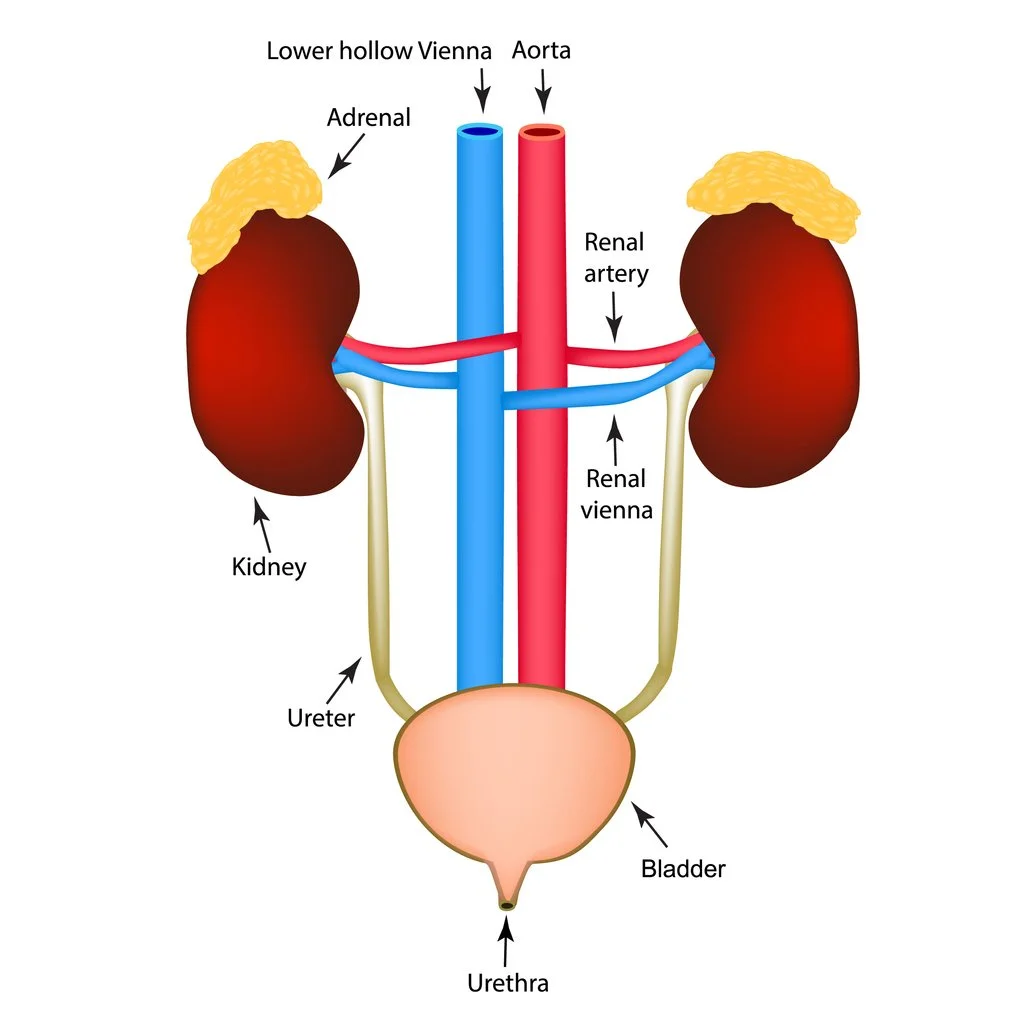
Upper and lower urinary tract: basic. Image credit: Timoninalryna via istockphotos.com

What is a UTI; Why They are Most Prevalent in Ladies
A UTI occurs when microorganisms enter the urinary tract and begin multiplying. Most uncomplicated UTIs involve the lower urinary tract (especially the bladder), and the most common organism is E. coli, a bacteria found in our gut that becomes problematic when it migrates to the wrong area(s).
Women experience UTIs far more frequently than men mainly because of anatomy. The female urethra is short—roughly 1.5 inches—while the male urethra is much longer. That shorter distance makes ascending bacterial infection into the bladder much easier. Additionally, the urethral opening is close to both the vagina and the anus in female anatomy, which increases the likelihood of bacterial transfer through hygiene habits, moisture, friction, and intimate activity.
Hormonal changes can also influence vulnerability. During menstruation, shifts in pH and increased moisture can create a more favorable environment for overgrowth. During menopause, declining estrogen levels can thin and dry urogenital tissues and alter the vaginal environment, making bacterial colonization more likely and irritation more common. Pregnancy raises risk for different reasons: pressure on the bladder can make complete emptying harder, urinary tract tone changes, and the immune system is naturally modulated during pregnancy.
Other common risk factors include tight clothing and synthetic underwear that trap heat and moisture, the use of spermicides or diaphragms that may irritate tissues or impair bladder emptying, and behaviors that encourage urine retention (people such as teachers, nurses, drivers, and anyone with restricted restroom access). In diabetes, UTIs can be more frequent and harder to resolve, especially when blood sugar is high. When glucose spills into urine, it can feed microbial growth and increase both UTIs and yeast issues.
Symptom Patterns of Note
Early- to Mid-stage UTIs: Early onset often begins with subtle changes: mild burning, increased urination frequency, a feeling of urgency (need to urinate), pelvic pressure, or the sense that the bladder is “not quite right.”
During mid-stage, once the infection is established, urine may become cloudy or strong-smelling, discomfort (painful urination) may intensify, and blood (and even pus or crystals) may appear. Fatigue and malaise are common as well.
One of the most important things in the case of UTI is to recognize red flags. In later stage infections, high fever, chills, nausea and vomiting, and significant flank pain (pain in the back/side near the ribs) may indicate upper urinary tract involvement or even kidney infection. In these cases, self-treatment is not appropriate. The same is true in pregnancy, in children, in immunocompromised clients, and when symptoms fail to improve within 24–48 hours.

Prevention and Herbal Supports for UTI
For clients prone to recurrent UTIs, prevention is usually where the biggest wins happen. This was my personal experience, years ago, as a public school teacher, as well as for many of my clients over the years.
These foundational habits aren’t glamorous, but they are powerfully helpful:
Consistent hydration with real water
Avoid sugar and processed foods/drinks
Regular bladder emptying
Minimizing irritation and moisture in the urogenital area.
Encourage clients/family members to avoid “holding it” for long periods (especially important for those with schedule-bound jobs)
Front-to-back wiping after urination
Avoid harsh and scented products
Choose breathable underwear to increase air flow (cotton or natural fabrics)
All of these can reduce bacterial transfer and tissue irritation and also reduce the chance of a full-on urinary tract infection.
Sexual activity is a common trigger for many women, and prevention here is largely mechanical and timing-based. Urinating before and especially after intimacy supports washout of bacteria. Adequate hydration and gentle hygiene (plain water rather than harsh soaps) can make a significant difference. If a client repeatedly flares after intercourse, that pattern is worth noting, as is the potential role of irritating lubricants or spermicides.
From an herbal perspective, preventive strategies often focus on three categories:
Discouraging microbial adhesion to the bladder walls, where bacteria create colonies
Supporting urinary flow
Supporting tissue integrity and tone
Cranberry is a classic example used to reduce bacterial adherence to bladder tissue. D-mannose is another commonly used option—particularly for E. coli-related patterns—because it can interfere with the organisms’ ability to cling to the bladder lining. While neither cranberry nor D-mannose is “killing” bacteria in the way an antibiotic does, they can change the terrain and reduce persistence.
If you choose to use cranberry as a preventive measure, which I have had excellent results overall with, I suggest capsules taken daily. This standardizes the amount you take in. If you’re more into the pure herb form, you can certainly eat or drink cranberry fruit or juice, but be sure these don’t have sugar added and are pure and high quality.
For those who experience recurrent infections, a gentle daily urinary-support tea can be a practical, nourishing tool. Traditional blends often include soothing demulcent herbs (such as marshmallow leaf or root and corn silk which are moisturizing and supportive of the bladder lining), mineral-rich diuretic support (such as nettle and dandelion leaf). The goal is not to “force” urination aggressively but to support comfortable flow and help make tissues more resilient over time.
Menopausal women may need additional tissue support because the terrain changes in the urinary tract are partly hormonal. Tonic (ongoing) approaches sometimes include herbs like red clover for phytoestrogenic support, nettle for mineral nourishment, and marshmallow for tissue soothing. While herbs can be helpful here, it’s also wise to consider broader support strategies for vaginal and urinary tissue integrity and to collaborate with clinicians when needed. Pelvic support strategies can also be helpful because they help retain the integrity of the important pelvic floor.

What to Do if a UTI is Just Beginning
When a UTI is just beginning—mild burning, urgency, and frequency without any of the red flags mentioned earlier—many herbs can act quickly to support the body in getting rid of the infection fast.
The first step is always hydration and increased urination frequency to encourage washout of the bladder. At the same time, students should think in terms of actions: antimicrobial support to discourage bacterial proliferation, astringency and toning to support tissue resilience, demulcency (moisturizing herbs) to soothe inflamed mucosal tissue of the bladder and urethra wall, and diuretics to support flow.
Here are some favorite herbs many herbalists choose to work with for UTI’s:
Cranberry: Mentioned above as a preventive, I like to also use it when infection is present as well. Increasing the dosage for the short-term often takes care of the infection, especially if started in time.
Uva ursi (bearberry) is a well-known urinary antiseptic herb and is typically approached as a short-term herb for acute situations rather than long-term daily use.
Goldenrod is often used as a supportive urinary herb in formulas. It helps to increase urinary output and is soothing.
Buchu is an herb that is antiseptic to the urinary tract and also supports flow.
Pipsissewa also appears frequently in traditional urinary protocols as well. It helps reduce inflammation and swelling in the bladder tissue and has antiseptic properties.
I also include berberine-containing herbs such as Oregon grape root or goldenseal for broader antimicrobial support, often keeping goldenseal use short-term and choosing Oregon grape as a more sustainable option. These are both short-term use herbs.
Because UTIs can be painful and inflaming, demulcent support is not a side note—it’s a main strategy. Marshmallow and corn silk are classic choices to soothe tissues in the bladder and urethra and reduce the “raw” feeling many clients/people describe. In practice, alternating stronger tincture/capsule dosing with frequent soothing tea can make a protocol more tolerable and supportive. Herbal teas also help increase the hydration, too.
An herbal tea formula for acute support might combine nettle leaf and dandelion leaf (for gentle flow and nourishment), goldenrod (urinary support), marshmallow leaf (soothing), and Oregon grape root or a small amount of goldenseal (antimicrobial support). Taken two to three times daily for several days, this can serve as both medicine and hydration.
Throughout early-stage support, be sure to pay attention to what is happening with the body. It’s tempting to back off on your protocol when things begin to feel a little better, but don’t do this. Keep up the early-stage interventions for several days to ensure the infection is truly resolved.
If symptoms are not clearly improving within 24–48 hours, if there is fever or systemic illness, or if other red flags appear, medical intervention is appropriate. There is no prize for “toughing it out,” and protecting the kidneys matters greatly for health and well-being.

The BEST Herbalism Magazine Around!
Safety Considerations
Some urinary herbs are not appropriate for all situations. Juniper, an excellent helper for urinary tract support and infection for example, can exacerbate kidney problems if there is a history of stones or infection in the kidneys.
Strong antimicrobial herbs such as goldenseal are commonly kept to short durations rather than extended use. Uva ursi is also generally approached as a short-term herb, and it’s important for you to research any herbs you choose to take.
Recurrent UTIs should always prompt deeper assessment to get to the root cause.
Patterns matter: intimacy-related triggers, constipation, hydration habits, microbiome disruption from repeated antibiotics, uncontrolled blood sugar, menopausal tissue changes, pelvic floor dysfunction, and anatomical factors can all contribute to recurring UTI’s. A powerful herbal protocol would include formulations and suggestions for any kind of root cause issue.
As always, holistic herbal support is most effective when it’s paired with understanding the “why” behind the recurrences.

Heidi’s Formula for Urinary Tonic Daily Tea
This formulation may be helpful for those with recurring UTI’s and may support prevention.
Ingredients:
1 part corn silk (Zea mays) and/or chickweed (Stellaria media)
1 part dandelion leaf (Taraxacum officinale)
1 part nettle leaf (Urtica dioica)
2 parts marshmallow leaf (Althaea officinalis)
1/4 part elderberries (Sambucus nigra)
**All these are dried herbs
Directions:
Blend the dried herbs together. To prepare an infusion, use 2 to 4 teaspoons herb blend to 12 ounces of just boiled water. Steep for 30 minutes or longer (the longer you infuse the herbs in water, the more potent it will be….for a medicinal infusion, steep several hours).
NOTE: Demulcent herbs contain mucilage, and this is the constituent that soothes and coats the mucosal lining of the urinary tract. You will hear some herbalists say that marshmallow leaf or other demulcents should “never” be infused in hot water, only cold infusions. While this is true to an extent, I have found over and over again over the years that plenty of mucilage is extracted in hot water as well, especially since it cools as the herbs infuse. There’s no need to make things more difficult.
UTI Herbal Tea Formulation
In the unfortunate event you come down with a UTI, this is a helpful herbal tea to take often during the day. I suggest sipping on a pint or more over the course of an entire day for several days. Remember that some of these herbs are for short term use only.
Ingredients:
1 part dandelion leaf (Taraxacum officinale)
1 part nettle leaf (Urtica dioica)
2 parts Oregon grape root (Mahonia aquifolium or Mahonia repens)
1 part goldenrod (Solidago spp)
2 parts marshmallow leaf (Althaea officinalis)
1 part echinacea (Echinacea angustifolia or E. purpurea)
Directions:
Combine the herbs together to create a loose leaf tea. To make the infusion, use 2 to 4 tsp blend in an infuser and pour 12 ounces of just boiled water over the top. Steep for 30 minutes or longer. Drink two to three cups per day for up to five days.
NOTE ON TINCTURES:
You can also make these blends into tinctures, for easier use. Three full droppers of tincture blend (about 1/2 tsp) is indicated 3 to 5 times a day for the typical 150 pound person. Adjust the amount taken according to the size of the person.
Visit my website, Healing Harvest Homestead, for many medicine making articles or my YouTube channel for lots more information.
Final Thoughts on Urinary Tract Infections
UTIs sit at the intersection of anatomy, habits, microbes, tissue integrity, and inflammation. For an herbalist, the goal isn’t to memorize a single “UTI tea recipe.” It’s to learn how to think: support flow, change the terrain, soothe inflamed tissues, discourage microbial persistence, and recognize when the situation requires medical care. This requires knowing the human you’re working with and is what holistic herbalism is all about.
Are you a beginning or advanced herbalist?
Then my course on Western Herbal Energetics is for you! Check it out HERE.

Ready to learn how to choose the right herb for the right person? Here you go! Western Herbal Energetics….
Don’t be a stranger! Be sure to be added to my newsletter list so you can enjoy weekly updates, herbal information found nowhere else, written by me, a human being, and lots more!
You can join my list when you get one of my FREE things, like the Herbal Remedy Guide and Cheat Sheet.
Hugs, Health, and Herbs,
Heidi
P.S. Here’s the link for the Herbal Remedy Guide and Cheat Sheet!