
Adaptogens, Low Energy, and Making the Best Plan for a Vibrant Life
According to clinical herbalist, teacher, and author, Heidi Villegas, many people are using adaptogen herbs incorrectly. They expect adaptogens to be magical herbs and to provide loads of energy while helping with sleep. The fact is, there are nuances to working adaptogens you need to understand. You’ll find out all you need to know to work effectively with adaptogen herbs for energy.

What you’ll find in today’s article:
Causes of low energy and fatigue
How to fix your energy problem
What an adaptogen is….and isn’t, and common myths about adaptogens
Categories of adaptogens
How to choose and use the right adaptogen for you
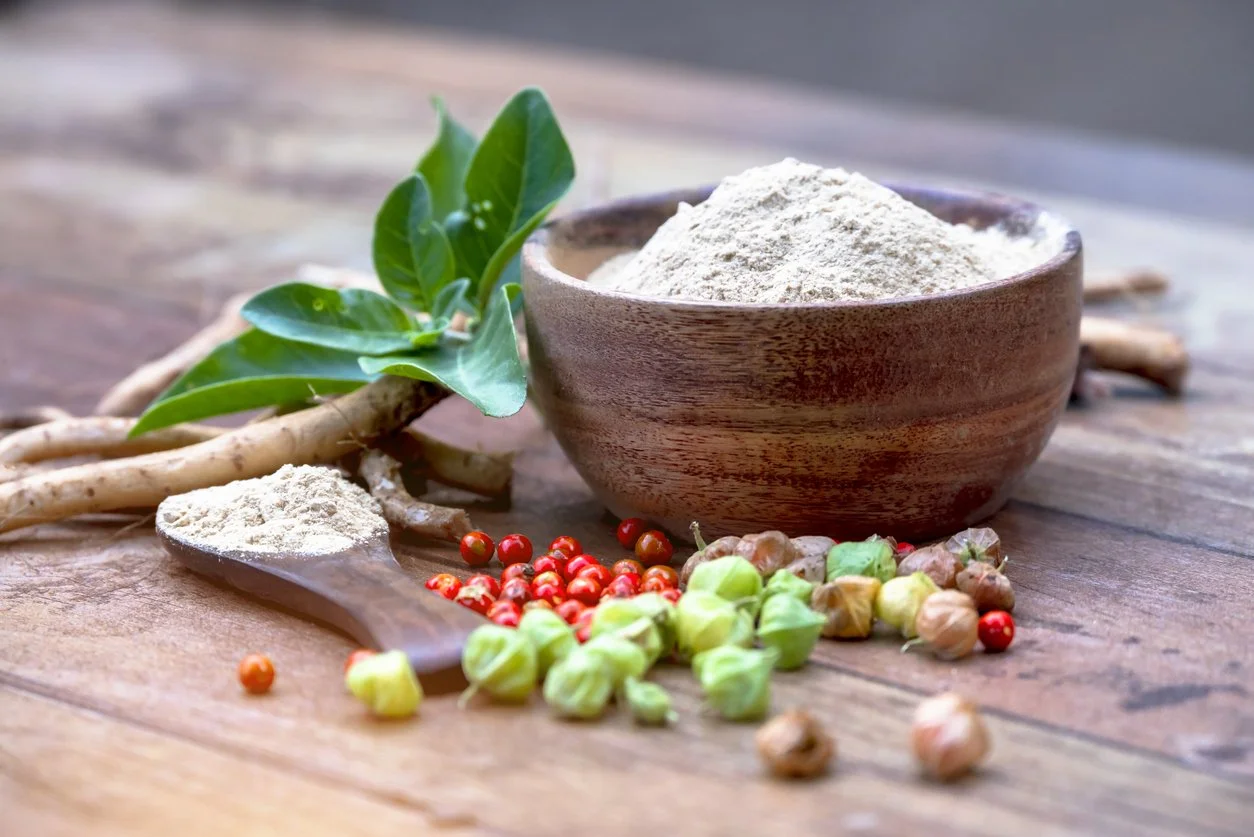
Photo by Kiran Nagare via istockphotos
Adaptogens, Low Energy, and the Real Sleep Problem
Adaptogen herbs are everywhere right now.
They’re in powders, capsules, teas, tinctures, coffee alternatives, energy blends, and “stress support” formulas. And depending on who’s talking, they’re either the answer to modern exhaustion or the best natural fix for burnout, brain fog, and low energy.
But here’s the truth: adaptogens are some of the most misunderstood herbs in the natural health world.
They can be wonderfully helpful when they’re used wisely. But they’re not a shortcut, and they are definitely not a substitute for sleep, nourishment, or common sense.
In truth, if they’re used incorrectly, adaptogens can actually make matters worse for a person’s body and mind. They can prop a person up when what they really need is deep rest, better food, a calmer nervous system, and a more honest look at what is draining them in the first place.
That’s the part people don’t always want to hear because so many of us want that “quick fix.” Adaptogens, although effective when used right, are far from a quick fix.
When someone is dragging through the day, relying on caffeine, snapping at everyone, struggling to think clearly, and waking up tired no matter how long they were in bed, it is very tempting to look for the one herb that will “fix energy.” But low energy isn’t that simple.
Low energy is sometimes about more than being “tired”
Of course, sometimes the cause of fatigue is obvious. If you stayed up far too late, slept poorly, and have a busy day ahead, you’re going to feel it. That kind of fatigue usually has a straightforward solution.
But deeper, ongoing fatigue is another matter.
When a person feels worn down day after day, has a hard time getting going in the morning, feels foggy, flat, or overwhelmed, and never quite seems restored, even after a full night in bed, we need to look deeper. That kind of low energy usually has roots. And three of the most common places to start are sleep quality, stress load, and nourishment.
Sleep quantity matters. Sleep quality matters as much if not more than the amount you get.
Many people misunderstand sleep.
They’ll say, “I got eight hours,” as though that settles the matter. But eight broken, restless, shallow, unsettled hours tossing and turning are not the same thing as truly restorative sleep. A person can technically be in bed long enough and still wake up tired, unrested, even exhausted before the day even begins.
So when someone is struggling with energy, one of the best questions is not just, “How many hours are you sleeping?” It’s this: How do you feel when you wake up? Do you feel restored? Clear-headed? Ready to go? Or do you feel like you’ve been hit by a truck and are already behind before the day begins?
The answer to that question tells you a lot.
If sleep is poor, adaptogens are probably not the first place to start.
Because if the body is not getting the kind of deep, nourishing sleep that repairs and restores, then pushing for more energy can become part of the problem. Sometimes what looks like “needing more energy” is actually a desperate need for better sleep.
And that’s especially important now, because so many people are exhausted but also overstimulated. They’re tired and wired at the same time. Their bodies are worn out, but their nervous systems don’t know how to regulate and settle correctly. In that kind of situation, grabbing a stimulating herb or a trendy “energy adaptogen” can be exactly the wrong move.
Stress drains more than your mood
Another major piece of the low-energy puzzle is stress.
Not just emotional stress, though certainly that matters, but the kind of ongoing strain that keeps a person in a constant state of tension. This is the tension from always being ready to fight or flight; or living with pressures of various kinds that won’t go away; or any number of modern stressors.
That kind of living is expensive, both financially and mostly emotionally/physically.
It drains the nervous system. It affects sleep. It disrupts digestion. It pulls from your reserves. It can leave a person feeling on edge, depleted, mentally scattered, and physically tired all at the same time. And if that pattern goes on long enough, the body starts waving a white flag. This is the situation many herbalists call adrenal fatigue, and it’s no joke.
That is one reason adaptogens became so popular. They are known for helping the body better handle stress. But even here, we need to be careful. Adaptogens aren’t permission slips to keep living in a way that’s wearing you down. They’re not meant to help you ignore your limits and push harder.
Used well, they may support resilience. Used poorly, they may just help you override the warning signs for a little longer. We MUST honor what our body is needing and telling us for our health and well-being.

Sometimes the problem is not “adrenal fatigue.” Sometimes the body simply needs building up. Nourishment.
This is another area where people get confused.
When energy is low, many assume the adrenals are always the problem. But the body’s energy picture is much broader than that. Sometimes a person is simply undernourished, not eating enough protein, not digesting well, low in key nutrients, or running on stress hormones and convenience foods. No herb can replace the foundations.
Adaptogens don’t make up for poor nourishment.
They can’t replace minerals, protein, B vitamins, healthy digestion, or the basic work of feeding the body well and consistently over a long period of time. And they certainly don’t erase the consequences of long-term sleep deprivation.
There is no adaptogen deficiency.
But there are plenty of exhausted people who need better food, deeper rest, and less stimulation.
Ready to learn about sleep and how to fix yours?
We’re starting a new series of Special Sessions inside our Herbal Community, the Confident Herbalist Tribe next month! We’re going to cover the area of sleep thoroughly, from anatomy and physiology, to routines, to the herbs and essential oil strategies that can help, and a lot more!
In addition to the massive library of courses, masterclasses, videos, and searchable content, our community can help. Join us for our newest series of Special Sessions on Sleep, starting in May, 2026! Always part of the teachings inside the Confident Herbalist Tribe community and courses.
Pre-order my latest book! It releases November, 2026 by Lyon Publishing.
What are adaptogens?
Adaptogens are a class of herbs traditionally described as helping the body adapt to stress and maintain balance. The term itself was developed in the twentieth century by Russian scientists doing studies on athletes and industrial workers. Adaptogens come with specific criteria. In other words, not every herb that helps with stress or energy is automatically an adaptogen.
This distinction matters because once a word becomes popular, it starts getting slapped on everything. Suddenly every herb is called an adaptogen, every formula promises stress relief and energy, and people start to believe adaptogens are some kind of natural miracle category that works for everyone in every situation. An example is that we now see ashwagandha everywhere!
As in all the mainstream “super herbs” we’ve seen in the past few decades, this is just not how we use herbs appropriately. It’s not a true or “good” way to work with medicinal herbs for health.
Adaptogens are not all the same. Some are more calming. Some are more stimulating. Some are better for the worn-down, tense, overworked person who can’t sleep well. Others are more energizing and better suited to a very different picture. Some are warming, and some are cooling. Matching the herb to the person matters.
Plus, dosage matters. Timing matters. Constitution matters.
By definition, adaptogens must be safe for most people, they should be able to be used over a period of time without harm, and they help support the body in managing and adapting to physical, mental and environmental stressors.
Adaptogens are non-toxic, non-specific (acting on many systems in the body), and normalizing (bringing the body back into balance).
Five myths about adaptogens:
Here are a few common myths I’ve seen over and over again in my practice.
Myth #1: People think adaptogens are for everyone. They are not. Just because an herb is popular doesn’t mean it’s appropriate for every person.
Myth #2: People think all adaptogens do the same thing. They just don’t! Ashwagandha isn’t astragalus. Rhodiola isn’t eleuthero. Schisandra isn’t shatavari. They simply are NOT interchangeable.
Myth #3: People treat adaptogens like free energy. But….they don’t act this way. They do not replace sleep, wise living, good food, rest, or stress reduction.
Myth #4: People assume “natural” means harmless. That’s never a wise assumption in any regard. Herbs are powerful. A poorly chosen herb, a wrong dose, or a stimulating herb used in the wrong person can contribute to jitteriness, anxiety, or trouble sleeping.
Finally, people want to just take adaptogens when the body is obviously asking for rest.
This one is huge.
If a person is sleeping badly, running on fumes, and showing clear signs of nervous system strain, the answer may not be to “boost” them. It may be to help them find peace, restore, and develop appropriate strategies and routines so they can sleep deeply again.

When sleep is poor, start there
If your sleep is poor, your energy problem is not really an energy problem first. Instead, it’s a sleep problem.
That doesn’t mean, of course, that every low-energy case is solved by getting in bed earlier. But it does mean that restorative sleep deserves serious attention before adaptogens become the star of the show.
If someone is waking often, having trouble falling asleep, feeling restless at night, staring at screens until bed, or waking unrefreshed every morning, all those things matter. The body may need calming herbs, nervines, better evening habits, blood sugar support, mineral support, or simply a more realistic pace of life.
Sometimes real lifestyle changes are the order of the day.
And honestly, this is where a lot of people find real change. Simply in consistent better nights of restful sleep.
A wiser way to think about adaptogens
I definitely think adaptogens have a place. But I think that place has to be more thoughtful and more limited than modern wellness marketing wants you to believe.
Adaptogens can be helpful when they’re chosen carefully, used in the right amount, and included as part of a broader plan, or protocol. They might support resilience. They might help a stressed body/mind cope better. They might be useful for some patterns of fatigue.
But they should come after the basics, not before them.
First ask:
Are you sleeping deeply and waking restored?
Are you eating enough real nourishment?
Are you living in a state of chronic stress?
Are you pushing beyond your limits?
Is there something going on in your psyche or life that needs attention?
Those questions are not as exciting (or as easy) as a trendy powder blend. But they are usually far more useful.

Check out our School of Botanical Arts & Sciences (SOBAS) by Healing Harvest Homestead
Final thoughts
Adaptogens are really GREAT herbs! They’re helpful, and they’re important to our practices. But they’re not magic, and also not a replacement for the foundational work that real healing usually requires.
When energy is low, it is tempting to search for the herb that will make you feel like yourself again overnight. But often, the body is not asking for more force. It’s asking for restoration.
Adaptogens can certainly be part of the plan. But please don’t believe that they ARE the plan.
Begin with your sleep. Then consider your lifestyle and amount of chronic stress. Then consider nourishment. Finally, add in the best herbs, including adaptogens, and create a protocol for yourself that works.
Do you need some help with a protocol for yourself?
Join us in the Confident Herbalist Tribe, the BEST library of video and texts, courses and live sessions, and an incredibly active and vibrant community where you can find answers to your health needs and learn herbalism together!
Hugs, Health, and Herbs,
Heidi
P.S. My favorite book on adaptogens is Donnie Yance’s book, Adaptogens in Medical Herbalism. It’s very thorough. (afflink)

Ready for the BEST Herbalism Community? Try it for a couple weeks for only $1, and see how powerful our resources and community are!