Top Ten Herbs for Sleep, How They Work, and Three Tea Blends
There are several mechanisms that affect our sleep. In our recent sleep course, which I’m currently teaching inside the Confident Herbalist Tribe, we’ve learned about the anatomy and physiology of sleep: pathways, rhythms, hormone and neurotransmitter function, and how we can support our bodies with the knowledge of the science of herbs that support rest.
We’re getting ready to dive into the large sleep materia medica next week inside the CHT! I thought I’d go ahead and share my own top 10 personal favorite herbs for sleep here with you, along with a brief overview of their mechanisms of action. There are many, many more herbs that are helpful for sleep, too many for a website article. If you’re interested in learning about the mechanism of sleep and the herbs and essential oils that can help tremendously well, check out the Confident Herbalist Tribe!
Herbs don’t work like a sleeping pill, or melatonin, or really, anything else. They each have their own ways of working in each body, and knowing this helps you to customize a formulation for an individual’s specific needs. This is part of becoming a truly holistic herbalism practitioner—-working with the individual. These ten herbs are wonderful places to begin if you’re needing help with sleep.
After I share the top ten herbs, I’ve created three different formulas for you to use, depending on your needs. I’ve formulated one for getting to sleep, staying asleep, and one for children.
Enjoy our FREE Herbal Foundations Email Course. Take your time. Save the emails. Become an herbalist!
Free printable downloads for your herbalism and aromatherapy journey. These are guides and printables to support your learning.
Ready to take your herbalism and/or aromatherapy learning seriously? Take a look at our programs!
A Materia Medica of 10 Favorite Herbs for Supporting Healthy Sleep
Here are my ten favorites, and you’ll find out which ones are best for you! Also, I’ve included some herbal blend formulations at the end, and there’s even one for kids!
I need to tell you to be sure and do research on each herb you’re considering if you’re pregnant, nursing, on medications or have a health condition to be sure the herb is right for you. Be sure to discuss use of herbs with your medical team. None of this information is meant to prescribe, treat, cure, or prevent any health issue. The FDA wants me to tell you this because our government doesn’t regulate medicinal herbs, thank heavens.
Now here are the herbs:
Passionflower (Passiflora incarnata):
Passionflower is an extremely versatile medicinal herb for helping with sleep. It's cooling, neutral in moisture, and works specifically for the kind of insomnia driven by circular thinking — that endless loop of the same worry playing on repeat the moment your head hits the pillow. If you lie there ruminating on all the things you need to get done, the relationship issues, money problems, and any other thing, then this plant might be a good one for you to try.
Passionflower tends to break the thought loop rather than sedating heavily. It works fast enough for acute anxiety episodes too. Safe enough for children! There are no safety indications. For the person lying in bed thinking instead of sleeping, this is your go-to.
Skullcap (Scutellaria lateriflora):
Skullcap is completely different in action than passionflower. It's a cooling nervine tonic, which means in lower doses it builds the nervous system's capacity, and in higher doses it sedates. The person who needs Skullcap is hypersensitive to stimuli — everything's too loud, too bright, too much. They startle easily. Light sleepers tend to be in this category.
The fresh tincture is what you want; the dried herb is sedative but loses the tonic rebuilding effect a bit. But if all you have access to is the dried plant, that will work fine for the sleep aspect. Skullcap is remarkably safe for long-term use, which can't be said for most sleep herbs.
Skullcap is one of the nervine herbs I’ve recommended for agitated clients who feel overstressed during the day, too. Just one dropper full can be helpful for some very anxious people.
Valerian (Valeriana officinalis) :
Valerian is one of the most misunderstood and most likely misused sleep herbs there is. First, it’s mainly a warming anti--spasmodic, and secondly a sedative. It works best for the cold, tight person — muscles knotted, circulation sluggish, cold hands and feet. These people are tense and stressed. Valerian releases the physical tension, and sleep follows as a secondary effect.
However, if you give it to a hot, wired, high-strung person, you may be aggravating their body and mind — they may actually feel more agitated rather than relaxed. Some people (between 4% and 10% of the population) also react paradoxically and find it stimulating, especially with the dried herb, which is why the fresh tincture is preferred.
I like using valerian for pain relief, depending on the pain situation and the person. For an acute issue like a toothache or nerve issue, valerian can just help drop the person into a hard sleep. That is, unless they are of the group that reacts opposite to the herb.
California Poppy (Eschscholzia californica):
I LOVE California poppy. I am sure to cultivate no matter where I live. I’ve grown it in the Southern Nevada mountains, in Idaho on a south facing hill, and now it’s in a bed with western sun exposure this year. It grew as a weed at our apothecary down on the bank of the Clearwater River in Orofino when we lived there.
It is truly the quiet workhorse when it comes to sleep. It’s not dramatically powerful, but it provides a reliable, safe, non-narcotic sedative and mild analgesic base that makes other nervines work better. It's GABAergic without depressing the central nervous system. This means it supports our natural sleep hormone, GABA.
Safety wise, it’s not for pregnancy, but otherwise it’s very safe. Great as a foundation herb in sleep formulas.
Hops (Humulus lupulus):
Hops—-another favorite! It’s cooling and intensely bitter. It's specifically for the person who's hot and all wound up — The kind of person who can’t let work go at the end of the day and may have an acid stomach from stress.
That's the hops pattern, just wonderful relaxation. It cools the person with a hot and active mind. But important cautions: Hops is contraindicated in clinical depression (the cooling quality can deepen it), in estrogen dominance, and also use caution in pregnancy.
Lemon Balm (Melissa officinalis) :
Oh, sweet, sweet lemon balm is one of the most beautifully balanced nervine herbs we have. Cooling and aromatic, it's gentle and wonderful for the person who runs hot and just can’t “turn off.” It’s for the anxious and very busy person.
The tell is when someone describes themselves as ADHD or with a mind that’s all over the place. Lemon Balm calms without sedating, focuses without stimulating. No known warnings, safe for long-term use. It's also lovely as a tea.
I should also say that it’s one of my favorites for working with all kinds of nervous system issues, especially viruses like the herpes family that attack nerve cells and cause nerve pain. These are viruses including shingles, cold sores, chicken pox, and genital herpes.
Safety: There is information floating around that lemon balm may exacerbate low-thyroid function. Be sure to speak with your doctor if you’re taking medications for thyroid.
Vervain (Verbena officinalis/hastata):
Blue vervain is for a very specific type of insomnia. The type of person who may benefit from vervain is the extreme Type A, full of tension, who runs on willpower, and astounds people because they go and go until they collapse. The entire body may even hold tension, but definitely the shoulders and neck. Vervain releases tension from the outside of the body into the mind. In other words, the neck relaxes first, then the mind follows.
Safety: Vervain, unfortunately, is a low dose herb, so I don’t use it often, and I’m very careful when I do and who I choose to offer it to. Too much causes nausea. If you want to try vervain, start low, around 5-10 drops. Not for pregnancy.
Milky Oats (Avena sativa):
Milky oat tops are in a different category from the rest of these herbs which are primarily relaxing or sedating. Oats aren’t a sedative at all — it's a nourishing nervine tonic, a trophorestorative that feeds a depleted nervous system back to health over weeks and months. The effect is cumulative. People rarely feel a dramatic shift on day one, but after six weeks they notice they're sleeping better and recovering faster from stress.
Choose milky oats for the burned-out, exhausted person whose insomnia comes from having nothing left to give. If a person is suffering from complete shutdown, milky oats are a great choice.
Safe in pregnancy and breastfeeding. This herb works best when fresh — dried milky oats are ineffective. This is because it’s the milky latex found in the ripe oat top that is medicinal.
Chamomile (Matricaria recutita):
Oh, lovely chamomile! This sweet, apple-scented flower isn’t a heavy sedative but instead is a gentle, safe option that's especially useful when sleep troubles are tied to digestive upset. It’s a gentle antispasmodic herb, so if a person eats late or has stomach upset it’s a wonderful choice. It’s for irritated, whiny toddlers of any age. So if you have a complaining person or one who is very sensitive to discomforts especially if the gut is involved, then it’s probably the perfect choice.
It's cooling, aromatic, and anti-inflammatory in the GI tract. Safe for infants all the way up to the aged. If you have a baby with colic and you’re nursing, try a cup of chamomile tea about 30 minutes before nursing. You may be pleasantly surprised.
Safety: Chamomile is a member of the Asteracaea family, and a very small percentage of people may have an allergic reaction to chamomile. If you’re concerned, you can do a simple patch test. Or, if you find you react, just stop taking it.
Kava (Piper methysticum):
Kava is SO relaxing. In fact, it can be argued that it’s the most potent anxiolytic in the Western herbal repertoire! If your sleep is disrupted by anxiety and physical tension, then kava can help.
It's warming, numbing, and works throughout the entire body — tight muscles, jaw clenching, gut tension. It's one of the few herbs that provides fast relief comparable to pharmaceuticals.
Safety: It carries real cautions: liver toxicity with poor quality material (use only noble cultivars from reputable sources), avoid with alcohol and acetaminophen, limit continuous use to 3-4 months. It's NOT a daily long-term herb, but for acute insomnia driven by severe anxiety or physical tension, nothing else helps quite as well.

Herbal Tea Blend One: Getting to Sleep
This is a common sleep condition, and it usually has to do with the monkey-mind. This is the brain that won’t shut down. You keep ruminating, planning tomorrow, going over the day that just passed, or worrying about something that you can’t do anything about at the moment anyway. Here are the herbs for this formula:
Passionflower is the lead active herb. It breaks the thought loop, thankfully. This is for the person who isn’t having sensory overwhelm necessarily, but whose brain just won’t stop.
California poppy is another active component. This helps create the conditions for sleep, and it positively affects GABA.
Lemon balm is a supporting and harmonizing herb. Lemon balm helps cool the mind and body down a bit, and it doesn’t sedate heavily…just mild relaxation.
Hops I like in this formula because it helps relax the body and the mind and synergizes well with the other herbs in the formula.
Getting to Sleep Blend:
2 parts passionflower
2 parts California poppy
1 part lemon balm
1 part hops
Herbal Tea Blend Two: Staying Asleep
This is such a difficult problem for many. I’ve had many, many clients who get to sleep just fine, but if they’re awakened in the middle of the night, they just can’t get back to sleep. Their mind races, and the body won’t cooperate.
Another factor for some people who tend to wake up between 2 or 3 in the morning and not being able to return to sleep is it could possibly be about blood sugar regulation, liver heat, or the body releasing stress hormones at an inappropriate time in the middle of the night. Here, we want to address the cognitive issue as well as the physical systems at play.
Skullcap is the most active herb because it is the best one for the hypersensitive person. This is the person who can’t sleep with any light or shift in temperature. They have a nervous system that desperately needs support, but is not depleted completely.
Milky Oats is the strongest harmonizer. It is one you have to use consistently for about four to six weeks to see benefits, but in the short term, it can help with blood glucose support. It’s neutral and it’s moistening to the body, which also helps with night time dehydration.
Nutmeg: A pinch of nutmeg contains relaxing compounds that help a person stay asleep. I usually use nutmeg aromatically (essential oil), but it’s also tasty and wonderful for herbal teas—just not as powerful.
Valerian is a good one to work with, especially for the individual who is tense. For cold people (cold hands and feet, those who run cold) it’s especially helpful. for the hot person, wood betony (Stachys officinalis) might be a good substitute.
Hops is relaxing for most, and it’s helpful for G-I issues like an acidic stomach. It’s also cooling, so can offset the valerian a bit.
Staying Asleep Blend:
2 parts skullcap
2 parts milky oats
1 part valerian or wood betony
1 part hops
A pinch of nutmeg powder (about 1/4 teaspoon or so)
**You can take milky oats in the morning as well, so your body can begin to accumulate the compounds better.

Herbal Tea Blend Three: For Kids
Sometimes we can give children the same herbs adults will use, but to be honest, I’m careful with their nervous systems. They aren’t little adults, and if their nervous system is still developing, we need to take this into consideration. Also, the sleep architecture of children is very different than it is for adults. And, children tend to be more sensitive to any side effects of herbs. So, this is a conservative blend that may work for most kids.
The thing with children and sleep difficulties is that usually the issue is multi-layered. From diet like a heavy dinner, too much screen time, family dynamics, and growing pains—-all can affect a child’s sleep. So, if you feel any other factors are at play, it’s a good idea to go to the root cause of these in addition to providing the herbal support.
Chamomile is the foundational herb. It’s terrific for all ages of humans. It’s cooling, aromatic, gently antispasmodic, relaxing, and safe. It works on both the nervous system and the digestive system, which I love. Many times, sleep problems in children is due to discomforts, and chamomile can be quite helpful.
Catnip is the secondary active herb in this blend. Dried catnip is pleasant and relaxes gently. It’s safe even for babies. It supports the soothing action of the chamomile perfectly.
Lemon balm helps the child be calm, and is great for overtired, fussy children. Here I’m using it in a tea blend, but lemon balm, catnip, and chamomile are delightful in glycerites, too.
SPECIAL IDEA: Lavender essential oil on a cotton ball (1-2 drops only) tucked into the bottom of the pillow case can be soothing and support the effects of the herbal tea.
Final Thoughts on Herbal Supports for Sleep, and the Three Herbal Blends
This was a very quick overview of some of my favorite herbs for supporting healthy sleep. In the main herbal section, the focus was on herbs primarily for adults, and then I shared best herbs in a blend for children. You can see how an herbalist works with different individuals’ needs in unique ways to best support the individual. This is vital to understand!
Herbal medicine isn’t like allopathic (medical doctor) medicine. We help it be uniquely suited to each person we work with. These blends are wonderful starts, and feel free to be flexible with them and to change proportions or add other herbs depending on who you’re working with. For example, a “tween,” although not an adult, may be able to handle a more “adult” herb depending on their weight and personal needs.
Are you ready to build your home apothecary?
You might enjoy Ditch the Drugstore, our family herbalism course.
Are you ready to dive into deeper herbalism and aromatic topics?
To enjoy phytochemistry, create your own herbal adventure, and be in a strong and powerful community of herbalists to help you grow? A place where you can be mentored and make friends while learning deeper herbal topics?
You’ll love the Confident Herbalist Tribe
Ready to become a certified aromatherapist?
Consider our Aromatherapy Specialist program!
We have something for everyone in our School of Botanical Arts & Sciences!
Also…
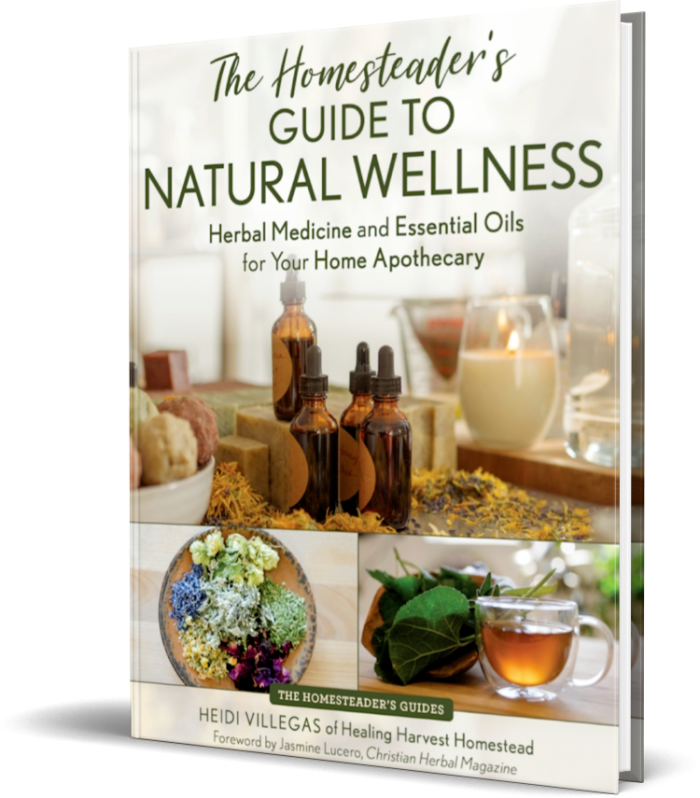
You can pre-order my book (The Homesteader’s Guide to Natural Health with Herbs and Oils) that’s being released this November, 2026! I would love if you would add this powerful and valuable resource to your herbal library. I wrote it to be a text you’ll turn to again and again…
Hugs, Health, and Herbs,
Heidi