
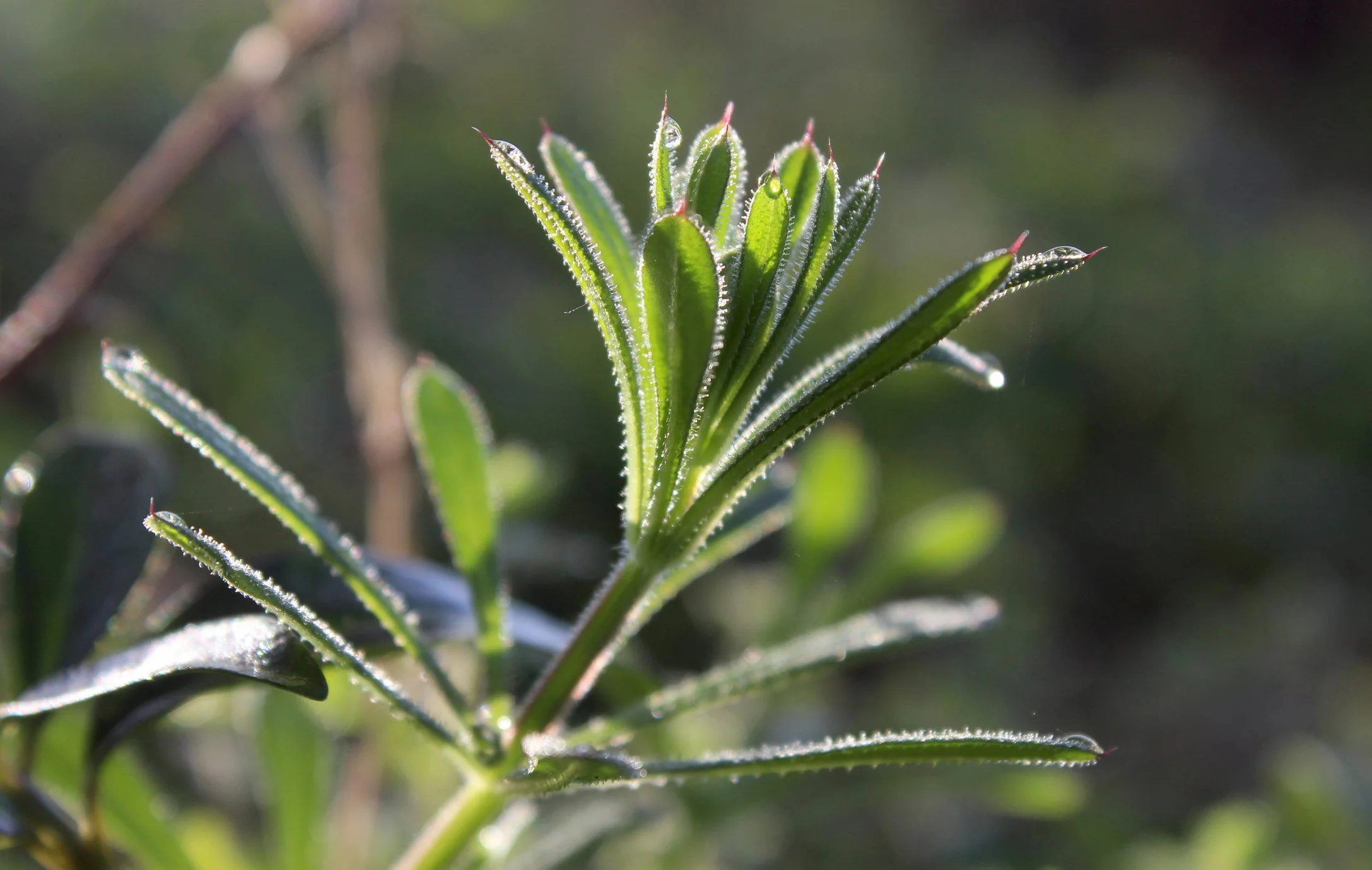
Cleavers (Galium aparine): A Favorite Herb to Harvest in Spring
In this article, Heidi Villegas, clinical herbalist and aromatherapist, author, and founder of the School of Botanical Arts & Sciences (SOBAS) as well as Healing Harvest Homestead, explains everything you need to know about cleavers (Galium aparine). You’ll learn the best ways to use cleavers, cleaver’s benefits to the human body, how to harvest and identify them in the attached YouTube video, and some ideas for delicious and nourishing spring tonics to make at home for your family.
Cleavers are one of those humble (and annoying to those who love a lawn) “weed medicines” that are easy to overlook until you understand what they do. According to herbalist Heidi Villegas, they are especially loved in traditional Western herbalism for lymphatic movement, spring cleansing, urinary support, and hot/irritated skin conditions.

Cleavers at a glance
Botanical name: Galium aparine
Family: Rubiaceae, the coffee family
Common names: cleavers, goosegrass, bedstraw, sticky willy, catchweed
Parts used: above-ground fresh plant, sometimes dried herb
Energetics: cooling, moistening to neutral, gently moving
Best preparation: fresh plant as cold infusion, fresh juice/succus, or tincture
Cleavers has many actions on the body, including being lymphatic, diuretic, alterative, cooling anti-inflammatory, and vulnerary. Enjoy our glossary HERE.
Modern research on cleavers remains limited, especially human clinical research, but phytochemical studies indicate that Galium aparine contains phenolic compounds, flavonoids, iridoids, and other constituents with antioxidant and immunomodulatory activity in laboratory studies. These constituents give support for why so many herbalists have valued it for so long, even though modern clinical studies are lacking.
Main benefits and uses of cleavers
Cleavers is considered a “food” herb and is quite safe unless you’re taking certain medications (see safety notes below). It’s nourishing, cooling, and best of all, it helps with puffy tissues in the body. Here are the deets:
1. Lymphatic support
This is the primary one, and it’s what makes it such a perfect spring time herb! Cleavers is a gentle lymph mover. Herbalists reach for it when there is stagnation in the body, which we can see/feel as puffy tissues, swollen glands, sluggish recovery after illness, tender lymph nodes, breast tenderness related to fluid congestion, or just that tired and sluggish feeling some of us get as winter ends.
I would not describe cleavers as “detoxing” in a dramatic and harsh cleanse-product way. I’d describe it more like this: It supports fluid movement and waste clearance pathways in the body, especially through the lymph and urinary system. Traditional herbal sources consistently describe cleavers as a lymphatic and depurative herb.
A depurative herb supports natural detoxification by helping remove metabolic waste products and toxins through the liver, kidneys, and lymphatic system. Cleavers fits this description perfectly. These kinds of herbs are often called “blood purifiers.”
Best fit:
Cleavers is often best when the person feels “boggy,” puffy, warm, irritated, or congested rather than dry, depleted, and cold.

2. Mild urinary support
Cleavers is traditionally used as a gentle diuretic, meaning it may increase urine flow. This is why it’s often used for mild urinary irritation, fluid retention, and “heat” in the urinary tract. It’s not an antibiotic and shouldn’t be presented as a stand-alone cure for a UTI. You can read my generalized protocol for UTI’s HERE.
For simple urinary discomfort, herbalists often combine cleavers with demulcents like marshmallow root or corn silk, or with urinary herbs like uva ursi in short-term situations when appropriate. But cleavers itself is the gentler, cooling, fluid-moving part of the formula.
3. Skin support from the inside and outside
Cleavers has a long history of use for skin issues connected with heat, irritation, or internal stagnation: eczema-like irritation, psoriasis support, rashes, acne, minor wounds, and inflamed skin. Traditionally, cleavers has been helpful to many for seborrhea, eczema, and psoriasis. NOTE: Cleavers has little clinical study evidence, so most of what I say here is regarding traditional and anecdotal use over hundreds of years.
Topically, cleavers can be used as:
A fresh poultice for minor irritation.
A wash or compress for hot, itchy, inflamed skin.
A cooled infusion added to a bath.
A hair/scalp rinse when there is irritation or flakiness.
For internal skin support, cleavers is often combined with burdock root, dandelion leaf/root, nettle, violet leaf, calendula, or red clover, depending on the person and the pattern.

4. Spring tonic
Cleavers is one of the classic early spring herbs. It emerges when the body often feels ready for lighter foods, more movement, and fresh green plant support. This is one reason herbalists love it as a spring tonic.
I especially like it as a fresh cold infusion in spring. It tastes green, mild, and slightly cucumber-like when fresh.
5. Swollen glands and post-illness sluggishness
Cleavers is commonly used when lymph nodes are mildly swollen or tender after a cold, sore throat, or general immune activation. This is not because cleavers “kills infection,” but because it is traditionally used to support lymphatic drainage.
SAFETY NOTE: New, unexplained, hard, fixed, very painful, or persistent swollen lymph nodes should be evaluated medically.
6. Breast and underarm lymphatic congestion
Many herbalists think of cleavers for breast tissue tenderness, underarm lymph congestion, or premenstrual puffiness, especially when combined with gentle movement, hydration, and lymphatic massage.
This is a traditional herbal use, not a proven treatment for breast disease. Any breast lump, nipple discharge, skin dimpling, persistent pain, or unusual change needs proper medical evaluation.
7. Edible wild green
Young cleavers are edible, but they are not usually enjoyed raw because the tiny hooked hairs make them clingy and scratchy. They can be cooked as a spring green before the plant becomes tough and seedy. The roasted seeds have historically been used as a coffee substitute, though gathering enough is a labor of love.
Best ways to prepare cleavers
There are many ways cleavers can be prepared, either for immediate use or for later on. For the “later on” uses, cleavers definitely deserves a place in your home apothecary.
Fresh cold infusion
This is my favorite.
Use a generous handful of fresh cleavers, chop or bruise them, place in a jar, cover with cool water, and infuse several hours or overnight in the refrigerator. Strain well.
Why cold? Fresh cleavers has a delicate, juicy quality. A cold infusion preserves that fresh spring character better than boiling water.
Fresh juice or succus
Fresh cleavers can be juiced or blended with a little water and strained. This is a more concentrated traditional preparation.
Some herbal references list fresh juice/succus around 3–15 mL up to three times daily, though dosing varies by practitioner and product.
Acetum (Vinegar infusion)
This is another one of my favorite ways to work with cleavers. You can watch me make a vinegar infusion in the video above, plus find out more about harvesting. The vinegar is very helpful for pulling out the nutrients from the plant.
To use your cleavers vinegar, just drink a shot or two a day in some water. Or…if you’d like a unique salad dressing, mix it with some lovely rosemary infused olive oil!
Tincture
Fresh cleavers tincture is often preferred over dried. I feel dried cleavers loses some of its special “green lymphatic” quality, though dried is still used. If you don’t have a choice and only have dried herb available, having cleavers tincture on hand is better than none.
A commonly listed tincture range is 30–60 drops up to three times daily, depending on the product and person.
Tea from dried herb
Dried cleavers can be used as an infusion. One reference lists 2–4 grams infused in water up to three times daily.
For dried cleavers, I’d lean toward a longer infusion rather than a quick tea bag steep. An overnight infusion is great! Then it’s ready in the morning for you.
Topical wash or compress
Make a strong infusion, cool it, strain it well, and apply with a clean cloth to irritated skin. Fresh cleavers can also be crushed into a poultice, though sensitive people may react to the scratchy hairs.

Simple cleavers formula ideas
These are just great ideas for you to start with! Play around, be flexible, and have fun with these springtime herbs. If you’d like help with formulating for yourself and others, join the Confident Herbalist Tribe for community, support, fun, and lots of helpful herbal education. For a limited time, join on in for a $1.00 trial!
Gentle lymphatic spring infusion
Cleavers
Nettle
Violet leaf
Dandelion leaf
Lemon balm or peppermint for flavor
This is gentle, mineral-rich, and very “spring.”
Skin support blend
Cleavers
Burdock root
Calendula
Violet leaf
Red clover, if appropriate
This is more alterative and skin-focused. You can find out more about alterative herbs HERE.
Urinary cooling blend
Cleavers
Corn silk
Marshmallow root
Dandelion leaf
A little peppermint or spearmint
This would be more for mild urinary heat or irritation, NOT a serious infection. Find out more about UTI’s HERE.
Swollen gland support
Cleavers
Calendula
Echinacea, short-term if immune support is needed
Lemon balm if stress or viral patterns are involved

Love to hold a publication in your hands? You’ll love this magazine as a helpful resource for your herbal library. And…I’m a contributor! Get yours here (digital and print options)!
Safety and cautions in using cleavers
Cleavers is generally considered a gentle herb when used appropriately, but there are still cautions to know about.
Because cleavers is diuretic, be careful if these medications are being used: diuretic medications, blood pressure medications, kidney disease, heart conditions, diabetes medications, or any condition where fluid balance matters. If your fluid balance is being medically managed, then cleavers is NOT an herb for you. Also, if you’re taking diuretic medications, be sure to discuss use of cleavers with your doctor because it may potentiate the diuretic action of the drug.
Avoid high or medicinal doses during pregnancy and breastfeeding unless guided by a qualified practitioner. Reliable safety data is limited.
Who cleavers is especially good for
Cleavers shines for the person who feels:
Puffy or fluid-stagnant.
Warm, inflamed, or irritated.
Prone to swollen glands.
In need of gentle spring lymphatic support.
Dealing with hot, itchy skin patterns.
Mildly sluggish after winter or after illness.
NOTE: Cleavers is not the herb I’d choose as the main support for someone who is very dry, depleted, cold, weak, or already urinating frequently unless the formula is balanced carefully.
If you’re feeling ready to dive into Western Herbal Energetics and learn how to match a person’s body needs to the best plants, then you’ll love my newest course!

Final Thoughts on Cleavers
Cleavers isn’t flashy or exciting, it doesn’t “kill everything,” and it’s not a harsh detoxification plant.
BUT! It IS a gentle and cooling mover.
As a family herbalist, I suggest using cleavers as needed to move lymph, purify urine, and remove inflammatory waste from the body. It pairs beautifully with the simple things people forget: water, walking, dry brushing, gentle stretching, mineral-rich foods, and restful sleep.
Speaking of sleep?
We’ve begun our second Special Series free inside the Confident Herbalist Tribe, our premium herbalism membership. You should join us! We’re going in depth, discussing endocrine balance and a whole lot more that affects ongoing good night’s sleep.
In a home apothecary, cleavers belongs in the category of:
“When the body feels puffy, stuck, hot, swollen, or sluggish, help things move gently.”
I hope you enjoyed learning a bit about this overlooked, yet incredibly helpful spring plant. If you have cleavers growing near you, give it a try and let me know what you think!
Hugs, Health, and Herbs,
Heidi